
Texas teen who fatally stabbed track athlete at school meet found guilty
Law Firm News

A Texas teenager who fatally stabbed a 17-year-old track athlete from a rival team during a high school meet was convicted of murder and sentenced to 35 years in prison Tuesday in a case that drew wide attention beyond the booming Dallas suburb where they were students.
A jury rejected Karmelo Anthony's claims of self-defense during a confrontation with Austin Metcalf in stadium bleachers last year. Most people who testified were students who described a heated exchange over Anthony's refusal on a rainy spring day to leave a tent that belonged to Metcalf's team.
Anthony, now 19, did not testify at trial and only his mother took the stand during the sentencing phase, telling jurors her son was sorry.
Notoriety about the case spread, in part, because of a flood of social media posts that amplified the killing in racial terms. Anthony is Black; Metcalf was white. Lawyers on both sides, however, told jurors the tragedy had nothing to do with race.
Jeff Metcalf, Austin's father, had also denounced those who sought to stoke racial divisions after his son was killed. A year later, he said again in a Collin County courtroom that it was never about race while his voice swelled with anger over the death of his son.
"You failed your parents, you failed yourself and you failed society," said Metcalf, looking at Anthony after the teenager was sentenced.
Jurors, who deliberated for less than three hours, had the option of a lesser charge, manslaughter, but didn't choose it.
Prosecutor Bill Wirskye had asked for a lengthy prison term.
"Mercy to the guilty," he said, "is cruelty to the innocent."
Earlier Tuesday, during the trial's closing arguments, the jury heard dueling narratives from Wirskye and defense attorney Mike Howard about what happened in April 2025.
Several schools were competing when Anthony sat under the Memorial High School tent that was perched in the bleachers. Austin Metcalf and others had repeatedly told Anthony to leave, witnesses testified, leading to an escalating confrontation.
Howard told jurors that Metcalf had "no legal right to put his hands on Karmelo."
"Texas law does not require that you wait until you get hit," Howard said. "In that split second of chaos, you must put yourself in his shoes."
During the nearly weeklong trial, prosecutors said Anthony provoked Metcalf, and witnesses testified that Anthony was the aggressor.
"This is not self-defense, folks. It's murder plain and simple," Wirskye said.
Anthony at one point reached inside a bag and replied: "Touch me and see what happens," according to a police report.
Metcalf pushed Anthony, according to witnesses, who said Anthony then pulled out a knife and stabbed him in the chest.
"You don't get to meet a shove with a stab, especially if you provoke the shove," Wirskye said.
The teens, both from Frisco, didn't know each other.
"He's very sorry for what he did. Please, have mercy on my son," Anthony's mother, Kala Hayes, pleaded to jurors shortly after the verdict.
The trial drew lines of spectators hoping to find seats in the gallery and unfolded amid heavy security at the Collin County courthouse. As police officers watched Tuesday, dozens of people stood outside the courthouse in 90 degree Fahrenheit heat (32 degrees Celsius) to await the verdict. There were wails of grief from one woman — "This isn't real!" — when the result became known.
Frisco is one of Texas' fastest-growing cities and is dotted with dozens of modern school campuses and gleaming athletic facilities. The parents of Anthony and Metcalf have said they were good students who planned to go to college.
Several students testified that Metcalf, after ordering Anthony to leave his team's tent, scoffed before Anthony reached into a bag and pulled out a knife.
Related listings
-
US families contest Italian law restricting citizenship by descent in court
Law Firm News 04/16/2026Two U.S. families went to Italy's highest court Tuesday to challenge the scope of a year-old law passed by Giorgia Meloni's government limiting citizenship claims to Italian descendants removed by more than two generations.Their lawyer, Marco Mellone...
-
Trump Administration Seeks Appeal to Pause White House Ballroom Halt Order
Law Firm News 04/07/2026The Trump administration is arguing that a judge's order to halt construction of a $400 million ballroom creates a security risk for President Donald Trump as it asks a federal appeals court to pause the ruling.In a motion filed Friday, National Park...
-
Prince Harry wins phone hacking lawsuit against Mirror Group Newspapers
Law Firm News 12/14/2023Prince Harry’s phone was hacked by journalists and private investigators working for the Daily Mirror who invaded his privacy by snooping on him unlawfully, a judge ruled Friday, delivering an historic victory for the estranged royal who broke ...
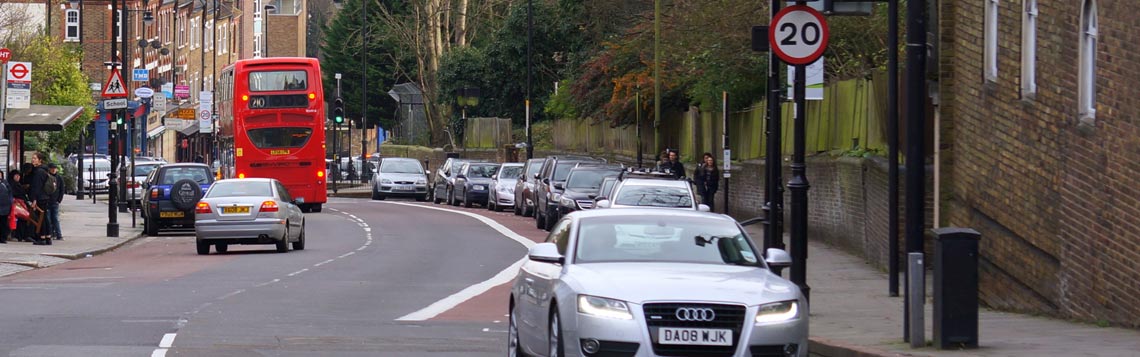
Does a car or truck accident count as a work injury?
If an employee is injured in a car crash while on the job, they are eligible to receive workers’ compensation benefits. “On the job” injuries are not limited to accidents and injuries that happen inside the workplace, they may also include injuries suffered away from an employee’s place of work while performing a job-related task, such as making a delivery or traveling to a client meeting.
Regular commutes to and from work don’t usually count. If you get into an accident on your way in on a regular workday, it’s probably not considered a work injury for the purposes of workers’ compensation.
If you drive around as part of your job, an injury on the road or loading/unloading accident is likely a work injury. If you don’t typically drive around for work but are required to drive for the benefit of your employer, that would be a work injury in many cases.
If you are out of town for work, pretty much any driving would count as work related. For traveling employees, any accidents or injuries that happen on a work trip, even while not technically working, can be considered a work injury. The reason is because you wouldn’t be in that town in the first place, had you not been on a work trip.
Workers’ compensation claims for truck drivers, traveling employees and work-related injuries that occur away from the job site can be challenging and complex. At Krol, Bongiorno & Given, we understand that many families depend on the income of an injured worker, and we are proud of our record protecting the injured and disabled. We have handled well over 30,000 claims for injured workers throughout the state of Illinois.