
Supreme Court Blocks California Transgender Student Disclosure Law
Lawyer Interviews

The Supreme Court cleared the way Monday for California schools to tell parents if their children identify as transgender without getting the student's approval, granting an emergency appeal from a conservative legal group.
The order blocks for now a state law that bans automatic parental notification requirements if students change their pronouns or gender expression at school.
The split decision comes after religious parents and educators challenged California school policies aimed at preventing schools from outing students to their families. Two sets of Catholic parents represented by the Thomas More Society say it caused schools to mislead them and secretly facilitate the children's social transition despite their objections.
California, on the other hand, argued that students have the right to privacy about their gender expression, especially if they fear rejection from their families. The state said that school policies and state law are aimed at striking a balance with parents' rights.
The high court majority, though, sided with the parents and reinstated a lower-court order blocking the law and school policies while the case continues to play out.
"The parents who assert a free exercise claim have sincere religious beliefs about sex and gender, and they feel a religious obligation to raise their children in accordance with those beliefs. California's policies violate those beliefs," and burden the free exercise of religion, the majority wrote in an unsigned order.
The court's three liberal justices publicly dissented, saying the case is still working its way through lower courts and there was no need to step in now. "If nothing else, this Court owes it to a sovereign State to avoid throwing over its policies in a slapdash way, if the Court can provide normal procedures. And throwing over a State's policy is what the Court does today," Justice Elena Kagan wrote.
Conservative Justices Samuel Alito and Clarence Thomas, meanwhile, noted they would have gone further and granted teachers' appeal to lift restrictions for them.
The Thomas More Society called the decision "the most significant parental rights ruling in a generation."
California Gov. Gavin Newsom's office defended the law, saying teachers should be focused on instruction, not required "to be gender cops."
The order "undermines student privacy and the ability to learn in a safe and supportive classroom, free from discrimination based on gender identity," said Marissa Saldivar, a spokesperson for the Democratic governor.
The Supreme Court has ruled for religious plaintiffs in other recent cases, including allowing parents to pull their children from public-school lessons if they object to storybooks with LGBTQ+ characters.
The California order comes months after the court upheld state bans on gender-identity-related healthcare for minors. The justices also seem to be leaning toward allowing states to ban transgender athletes from playing on girls sports teams.
School policies for transgender students, meanwhile, have also been on the court's radar in other cases. The court rebuffed another similar case out of Wisconsin in December, but three conservative justices indicated they would have heard the case. Justice Samuel Alito called the school policies "an issue of great and growing national importance."
The justices have been weighing whether to hear arguments in cases out of states like Massachusetts and Florida filed by other parents who say schools facilitated social transition without informing them.
The Trump administration, meanwhile, found in January that California's policies violated parents' right to access their children's education records. The Justice Department also sued after determining the states' transgender athlete policies violate federal civil rights law.
Related listings
-
China stages military drills around Taiwan to warn ‘external forces’ after US
Lawyer Interviews 12/27/2025China’s military on Monday dispatched air, navy and missile units to conduct joint live-fire drills around the island of Taiwan, which Beijing called a “stern warning” against separatist and “external interference” force...
-

Zimbabwe court to rule Friday on opposition's vote challenge
Lawyer Interviews 08/21/2018Zimbabwe's Constitutional Court said it will rule on Friday after hearing the main opposition party's challenge to the results of last month's presidential election, the first without longtime leader Robert Mugabe on the ballot.Police barricaded stre...
-

UK Supreme Court declines appeal from parents of ill toddler
Lawyer Interviews 04/16/2018Britain’s Supreme Court declined Friday to hear an appeal from a mother and father who want to take their terminally ill toddler to Italy for treatment instead of allowing a hospital to remove him from life support.The decision is another setba...
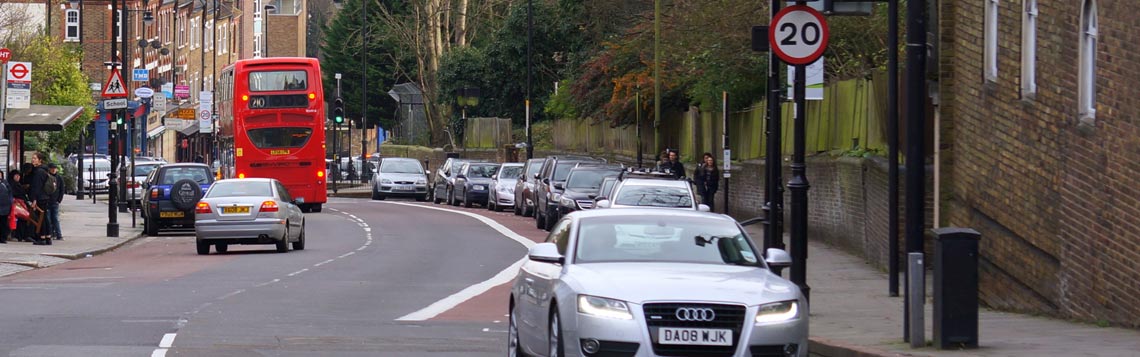
Does a car or truck accident count as a work injury?
If an employee is injured in a car crash while on the job, they are eligible to receive workers’ compensation benefits. “On the job” injuries are not limited to accidents and injuries that happen inside the workplace, they may also include injuries suffered away from an employee’s place of work while performing a job-related task, such as making a delivery or traveling to a client meeting.
Regular commutes to and from work don’t usually count. If you get into an accident on your way in on a regular workday, it’s probably not considered a work injury for the purposes of workers’ compensation.
If you drive around as part of your job, an injury on the road or loading/unloading accident is likely a work injury. If you don’t typically drive around for work but are required to drive for the benefit of your employer, that would be a work injury in many cases.
If you are out of town for work, pretty much any driving would count as work related. For traveling employees, any accidents or injuries that happen on a work trip, even while not technically working, can be considered a work injury. The reason is because you wouldn’t be in that town in the first place, had you not been on a work trip.
Workers’ compensation claims for truck drivers, traveling employees and work-related injuries that occur away from the job site can be challenging and complex. At Krol, Bongiorno & Given, we understand that many families depend on the income of an injured worker, and we are proud of our record protecting the injured and disabled. We have handled well over 30,000 claims for injured workers throughout the state of Illinois.