
Court strikes down Hawaii law requiring permission to carry guns
Litigation Reports

The Supreme Court struck down a Hawaii law requiring people to get permission to carry guns into stores and hotels on Thursday, in its latest opinion backing Second Amendment rights.
The high court's 6-3 decision means people can carry guns onto privately owned property like shopping malls and gas stations, unless the owners specifically say guns are banned at their establishments. It comes shortly after the court found that marijuana users can't be completely banned from owning firearms.
It's a win for President Donald Trump's Republican administration, which argued the law violates the Second Amendment. The measure was sometimes referred to as a "vampire rule" because it required people with guns get permission to enter, like vampire lore says bloodsuckers need an invitation to enter a home.
Hawaii argued that the 2023 measure ensured private owners could decide whether they wanted firearms on their property. The state passed the law as thousands more people got legal permission to carry guns in the wake of a 2022 Supreme Court ruling that found the Second Amendment gives most people the right to have guns in public.
About four other states have enacted similar laws, though presumptive restrictions for guns on private property open to the public have also been blocked elsewhere.
Hawaii also restricts guns in places like parks, beaches and restaurants that serve alcohol, but those rules weren't before the court. They are being challenged in lower courts, however.
The suit before the Supreme Court was filed by a gun rights group, the Hawaii Firearms Coalition, and three people from Maui. A judge originally blocked the measure, but an appeals court allowed it to be enforced. Trump's Republican administration backed the Supreme Court appeal.
The Second Amendment Foundation applauded the ruling. "This law was nothing more than a thinly veiled attempt to disarm peaceable citizens, and we're grateful the Supreme Court saw through the ruse," said Alan Gottlieb, its founder and executive vice president.
The gun-control group Everytown Law called the decision disappointing but pointed out that business owners can still post signs forbidding firearms on their properties. "The Supreme Court may have changed the default rule, but it cannot take away a private property owner's authority over their own land," said Janet Carter, managing director of Second Amendment Litigation.
The two Second Amendment decisions this term are the latest in a series of gun cases that have come before the Supreme Court in the wake of its 2022 ruling that led to a flood of challenges to firearm restrictions around the country. The justices have since struck down a ban on bump stocks, gun accessories that enable rapid firing, but upheld a federal gun law intended to protect domestic violence victims as well as strict regulations on firearms known as ghost guns, which are nearly impossible to trace.
Related listings
-
Supreme Court Backs Trump administration on Telecom Regulation
Litigation Reports 06/05/2026The Supreme Court sided with the Trump administration Thursday in upholding the power of federal regulators to enforce data privacy laws on telecommunications companies.The 8-1 decision preserved one of the Federal Communications Commission's key too...
-
Man who sprayed vinegar at Rep. Ilhan Omar during town hall pleads guilty to assault
Litigation Reports 05/09/2026A man who sprayed vinegar at Democratic U.S. Rep. Ilhan Omar at a town hall meeting in Minneapolis pleaded guilty to assault Thursday in federal court after reaching a deal with prosecutors.Anthony Kazmierczak, 55, is awaiting sentencing.Kazmierczak,...
-
Trump flexes executive power with unprecedented flouting of lower court rulings
Litigation Reports 05/06/2026When a federal judge shot down a Trump administration policy of holding immigrants without bond last December, it seemed like a serious blow to the president's mass deportation effort.Instead, a top Justice Department official insisted the ruling was...
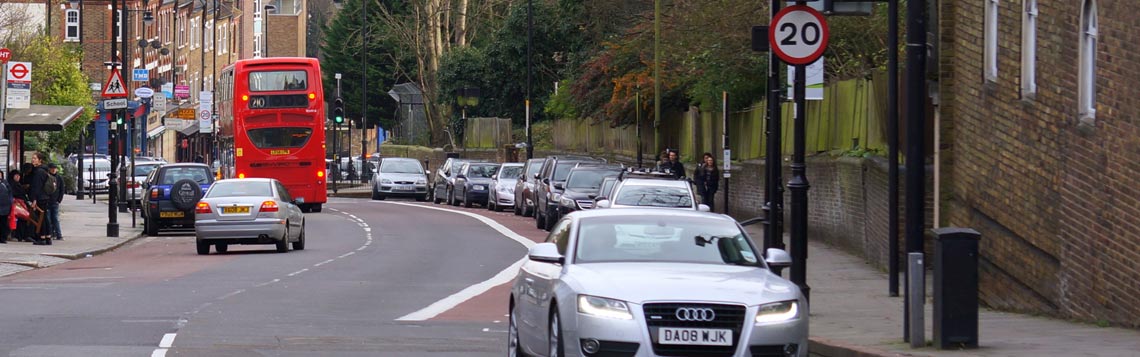
Does a car or truck accident count as a work injury?
If an employee is injured in a car crash while on the job, they are eligible to receive workers’ compensation benefits. “On the job” injuries are not limited to accidents and injuries that happen inside the workplace, they may also include injuries suffered away from an employee’s place of work while performing a job-related task, such as making a delivery or traveling to a client meeting.
Regular commutes to and from work don’t usually count. If you get into an accident on your way in on a regular workday, it’s probably not considered a work injury for the purposes of workers’ compensation.
If you drive around as part of your job, an injury on the road or loading/unloading accident is likely a work injury. If you don’t typically drive around for work but are required to drive for the benefit of your employer, that would be a work injury in many cases.
If you are out of town for work, pretty much any driving would count as work related. For traveling employees, any accidents or injuries that happen on a work trip, even while not technically working, can be considered a work injury. The reason is because you wouldn’t be in that town in the first place, had you not been on a work trip.
Workers’ compensation claims for truck drivers, traveling employees and work-related injuries that occur away from the job site can be challenging and complex. At Krol, Bongiorno & Given, we understand that many families depend on the income of an injured worker, and we are proud of our record protecting the injured and disabled. We have handled well over 30,000 claims for injured workers throughout the state of Illinois.