
Washington seeks over $38 billion from opioid distributors
National News

After rejecting a half-billion-dollar settlement, Washington Attorney General Bob Ferguson on Monday took the state’s case against the nation’s three biggest drug distributors to trial, saying they must be held accountable for their role in the nation’s opioid epidemic.
The Democrat delivered part of the opening statement in King County Superior Court himself, calling the case possibly the most significant public health lawsuit his agency had ever filed.
“These companies knew what would happen if they failed to meet their duties,” Ferguson told Judge Michael Ramsey Scott. “We know they were aware of the harms flowing from their conduct because in private correspondence, company executives mocked individuals suffering the painful effects of opioid dependence. ... They displayed a callous disregard for the communities and people who bear the impact of their greed.”
But Ferguson’s legal strategy isn’t without risk, as a loss by three California counties in a similar case this month — and an Oklahoma Supreme Court decision overturning a $465 million judgment against drug manufacturer Johnson & Johnson — demonstrates.
Orange County Superior Court Judge Peter Wilson issued a tentative ruling Nov. 1 that the counties, plus the city of Oakland, had not proven the pharmaceutical companies used deceptive marketing to increase unnecessary opioid prescriptions and create a public nuisance. The Oklahoma ruling said a lower court wrongly interpreted the state’s public nuisance law.
In an email, Ferguson stressed that the relevant Washington laws differ and called the cases “apples and oranges.”
Public nuisance claims are at the heart of some 3,000 lawsuits brought by state and local governments against drug makers, distribution companies and pharmacies. Washington’s is the first by a state against drug distribution companies to go to trial. Ferguson is claiming public nuisance and violations of state consumer protection law.
Related listings
-

North Carolina sued over newly passed maps favoring GOP
National News 11/08/2021Barely 24 hours after their passage, North Carolina’s newly drawn maps are facing another legal complaint that will likely determine how much Republicans can expand their political clout over the coming decade in a state that is slowly becoming...
-

International Criminal Court to probe abuses in Venezuela
National News 11/05/2021The International Criminal Court is opening a formal investigation into allegations of torture and extrajudicial killings committed by Venezuelan security forces under President Nicolás Maduro’s rule, the first time a country in Latin Am...
-

Cambodia amends charter to bar dual citizens from top office
National News 10/26/2021Lawmakers in Cambodia on Monday approved an amendment to the constitution barring Cambodians with dual citizenship from holding high government office, a move initiated by Prime Minister Hun Sen and directed at prominent opposition politicians. The g...
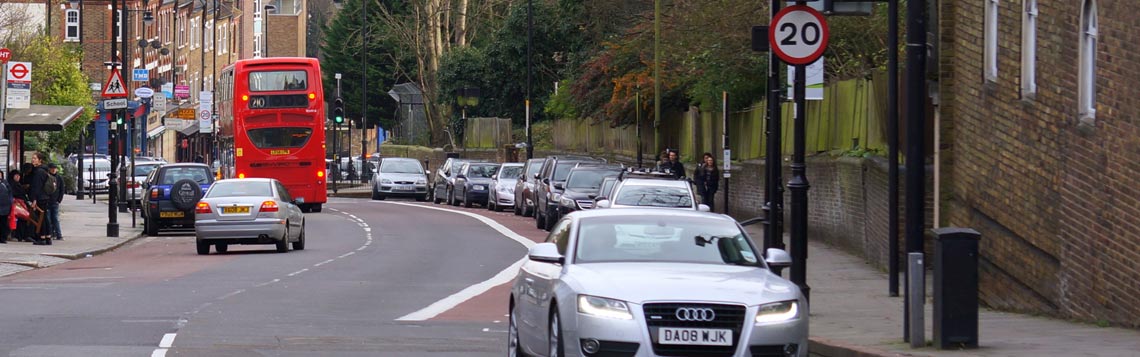
Does a car or truck accident count as a work injury?
If an employee is injured in a car crash while on the job, they are eligible to receive workers’ compensation benefits. “On the job” injuries are not limited to accidents and injuries that happen inside the workplace, they may also include injuries suffered away from an employee’s place of work while performing a job-related task, such as making a delivery or traveling to a client meeting.
Regular commutes to and from work don’t usually count. If you get into an accident on your way in on a regular workday, it’s probably not considered a work injury for the purposes of workers’ compensation.
If you drive around as part of your job, an injury on the road or loading/unloading accident is likely a work injury. If you don’t typically drive around for work but are required to drive for the benefit of your employer, that would be a work injury in many cases.
If you are out of town for work, pretty much any driving would count as work related. For traveling employees, any accidents or injuries that happen on a work trip, even while not technically working, can be considered a work injury. The reason is because you wouldn’t be in that town in the first place, had you not been on a work trip.
Workers’ compensation claims for truck drivers, traveling employees and work-related injuries that occur away from the job site can be challenging and complex. At Krol, Bongiorno & Given, we understand that many families depend on the income of an injured worker, and we are proud of our record protecting the injured and disabled. We have handled well over 30,000 claims for injured workers throughout the state of Illinois.