
Appeals Court Weighs Teen's Web Speech
Recent Cases

A teen who used vulgar slang in an Internet blog to complain about school administrators shouldn't have been punished by the school, her lawyer told a federal appeals court.
But a lawyer for the Burlington, Conn., school told the 2nd U.S. Circuit Court of Appeals on Tuesday that administrators should be allowed to act if such comments are made on the Web.
Avery Doninger, 17, claims officials at Lewis S. Mills High School violated her free speech rights when they barred her from serving on the student council because of what she wrote from her home computer.
In her Internet journal, Doninger said officials were canceling the school's annual Jamfest, which is similar to a battle of the bands contest. The event, which she helped coordinate, was rescheduled.
According to the lawsuit, she wrote: "`Jamfest' is canceled due to douchebags in central office," and also referred to an administrator who was "pissed off."
After discovering the blog entry, school officials refused to allow Doninger to run for re-election as class secretary. Doninger won anyway with write-in votes, but was not allowed to serve.
A lower federal court had supported the school. U.S. District Judge Mark Kravitz, denying Doninger's request for an injunction, said he believed she could be punished for writing in a blog because the blog addressed school issues and was likely to be read by other students.
Her lawyer, Jon L. Schoenhorn, told the appeals court Tuesday that what students write on the Internet should not give schools more cause to regulate off-campus speech.
"It's just a bigger soapbox," he said.
But Thomas R. Gerarde, an attorney for school officials, argued that the Internet has completely changed the way students communicate.
The three-judge panel of the appeals court did not issue a ruling after the arguments.
In 1969, the Supreme Court said schools could ban expression if they can show that not doing so would interfere with schoolwork or discipline. In a later ruling, it allowed officials to bar "vulgar and lewd" speech if it would undermine the school's educational mission. But both cases involved events that occurred on school property or during a school activity.
Related listings
-
Leaders split over choice of judge
Recent Cases 03/02/2008Roanoke Valley legislators have only one week left in the General Assembly session to appoint a new judge in the General District Court that serves Roanoke, Roanoke County and Salem.The Roanoke Valley delegation, which consists of three Republicans a...
-
New Jersey - Still no need to redefine marriage
Recent Cases 02/28/2008New Jersey Governor Corzine should not legalize same-sex marriage. AS EXPECTED from a panel stacked with same-sex activists, the Civil Union Commission issued a report last week saying that its members believe civil unions are a failure.What is their...
-
Suspect accused of running fake raffle
Recent Cases 02/28/2008A call to police from a Troy sports bar led to the arrest of a Royal Oak man believed to be involved in an area-wide fraudulent sports raffle sales scheme. A bar patron apparently realized the man selling raffle tickets purportedly for his 8-year-old...
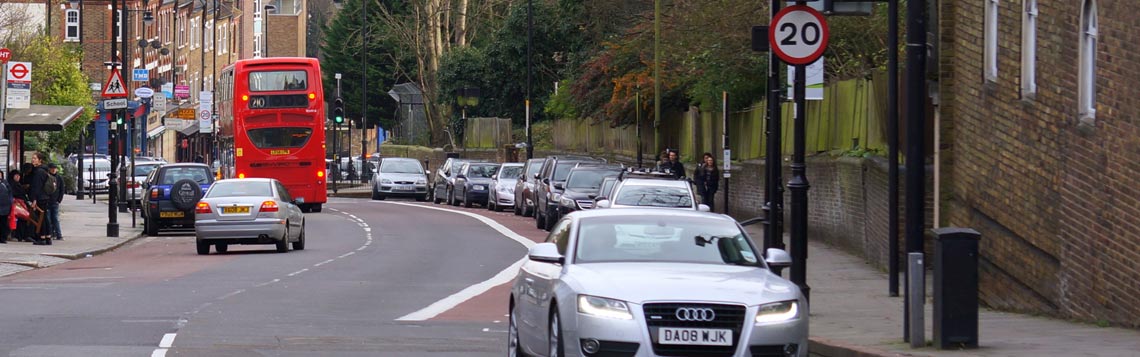
Does a car or truck accident count as a work injury?
If an employee is injured in a car crash while on the job, they are eligible to receive workers’ compensation benefits. “On the job” injuries are not limited to accidents and injuries that happen inside the workplace, they may also include injuries suffered away from an employee’s place of work while performing a job-related task, such as making a delivery or traveling to a client meeting.
Regular commutes to and from work don’t usually count. If you get into an accident on your way in on a regular workday, it’s probably not considered a work injury for the purposes of workers’ compensation.
If you drive around as part of your job, an injury on the road or loading/unloading accident is likely a work injury. If you don’t typically drive around for work but are required to drive for the benefit of your employer, that would be a work injury in many cases.
If you are out of town for work, pretty much any driving would count as work related. For traveling employees, any accidents or injuries that happen on a work trip, even while not technically working, can be considered a work injury. The reason is because you wouldn’t be in that town in the first place, had you not been on a work trip.
Workers’ compensation claims for truck drivers, traveling employees and work-related injuries that occur away from the job site can be challenging and complex. At Krol, Bongiorno & Given, we understand that many families depend on the income of an injured worker, and we are proud of our record protecting the injured and disabled. We have handled well over 30,000 claims for injured workers throughout the state of Illinois.