
Supreme Court agrees to review a Reconstruction-era ban on distilling spirits
Legal Compliance

The Supreme Court agreed on Monday to consider whether Congress had the constitutional authority to impose a ban on distilling spirits in private homes more than 150 years ago.
Plaintiffs challenging the prohibition on home distilling claim the 1868 law is an antiquated relic of Reconstruction-era politics. They argue that Congress overstepped its taxation powers when it enacted the home distilling ban as part of a tax reform measure designed to curb fraud by commercial distillers.
Government attorneys counter that Congress properly restricted where spirits can be distilled to prevent producers from evading federal excise taxes. They warn that lifting the ban would violate Supreme Court precedent and erode congressional powers.
Federal law makes home distilling a crime punishable by a maximum sentence of five years in prison and a $10,000 fine.
Separate challenges to the law divided two federal circuit courts, which issued conflicting decisions in April, only 11 days apart.
A three-judge panel from the Sixth U.S. Circuit Court of Appeals upheld the federal ban in a case brought by John Ream, a brewpub owner from Newark, Ohio, who wants to distill whisky at home for his personal consumption.
A Fifth Circuit panel ruled in favor of different plaintiffs — members of the Texas-based Hobby Distillers Association — and concluded that statutory prohibitions on in-home distilling are outside the scope of Congress' taxing power under the Constitution.
The Supreme Court agreed to review the Fifth Circuit decision, which was the Justice Department's preference. Plaintiffs' attorney Robert Alt said they are “thrilled” that the Supreme Court agreed to hear the case.
“Our country's founders would be rolling over in their graves to learn that a pastime in which even George Washington partook, which is as American as apple pie and certainly a lot older, has quite absurdly been turned into a federal crime,” Alt said in a statement.
Attorneys for the plaintiffs in both cases argue that Congress could ban a broad array of activities inside private homes — including cooking, gardening and remote work — under the government's interpretation of the 19th century law.
“The importance of this case and the questions it presents could hardly be overstated,” the plaintiffs' lawyers wrote. “It presents fundamental questions of the extent of federal power and the powers reserved to the states and the people.”
Justice Department attorneys said the government's regulation and taxation on the production of distilled spirits is as old as Congress itself. They noted that Congress outlawed home distilling to prevent those producers from evading taxes or government inspections.
“And because the location restrictions were enacted only after lengthy experience with tax evasion, upholding those restrictions would not open the door to hypothetical laws restricting other conduct lacking that history,” they wrote. The government says Ream asked the Supreme Court to resolve an “additional question” of whether location restrictions on home distilling exceed the scope of Congress's power to regulate interstate commerce. But the government urged the high court to avoid that question, saying it wasn't part of Ream's case or the government's current arguments in either case.
Related listings
-
Influencer pleads guilty to criminal impersonation for viral pranks
Legal Compliance 08/30/2026A social media influencer known for posting viral videos of pranks has pleaded guilty to criminal impersonation in Arizona for posing as an employee of businesses in a Phoenix suburb and orchestrating brief but chaotic takeover attempts.The outcome w...
-
Man convicted in murder-for-hire killing of Microsoft manager on Florida road
Legal Compliance 08/27/2026A man accused of arranging the fatal shooting of a Microsoft design manager on a Florida road was convicted Wednesday in a murder-for-hire scheme that followed years of a stormy child custody arrangement between the victim and his wealthy ex-wife.Jar...
-
Supreme Court sides with Trump administration on mail voting restrictions
Legal Compliance 08/25/2026The Supreme Court opened a path Monday for possible implementation of President Donald Trump's executive order restricting mail-in voting, though it remains unclear how much can be put in place before the fast-approaching midterm elections.The decisi...
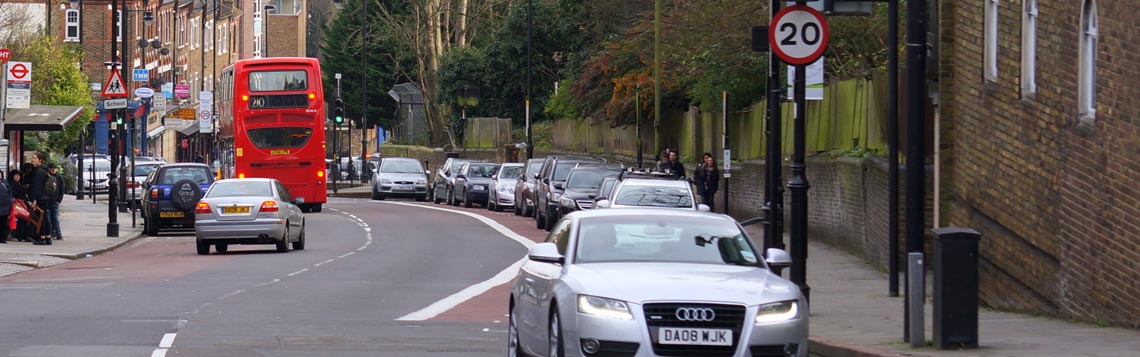
Does a car or truck accident count as a work injury?
If an employee is injured in a car crash while on the job, they are eligible to receive workers’ compensation benefits. “On the job” injuries are not limited to accidents and injuries that happen inside the workplace, they may also include injuries suffered away from an employee’s place of work while performing a job-related task, such as making a delivery or traveling to a client meeting.
Regular commutes to and from work don’t usually count. If you get into an accident on your way in on a regular workday, it’s probably not considered a work injury for the purposes of workers’ compensation.
If you drive around as part of your job, an injury on the road or loading/unloading accident is likely a work injury. If you don’t typically drive around for work but are required to drive for the benefit of your employer, that would be a work injury in many cases.
If you are out of town for work, pretty much any driving would count as work related. For traveling employees, any accidents or injuries that happen on a work trip, even while not technically working, can be considered a work injury. The reason is because you wouldn’t be in that town in the first place, had you not been on a work trip.
Workers’ compensation claims for truck drivers, traveling employees and work-related injuries that occur away from the job site can be challenging and complex. At Krol, Bongiorno & Given, we understand that many families depend on the income of an injured worker, and we are proud of our record protecting the injured and disabled. We have handled well over 30,000 claims for injured workers throughout the state of Illinois.