
US announces massive arms sales to Taiwan worth more than $10 billion
U.S. Court News

President Donald Trump’s administration has announced a massive package of arms sales to Taiwan valued at more than $10 billion that includes medium-range missiles, howitzers and drones, drawing an angry response from China.
The State Department announced the sales late Wednesday during a nationally televised address by the Republican president, who made scant mention of foreign policy issues and did not speak about China or Taiwan. U.S.-Chinese tensions have ebbed and flowed during Trump’s second term, largely over trade and tariffs but also over China’s increasing aggressiveness toward Taiwan, which Beijing has said must reunify with the mainland.
If approved by Congress, it would be the largest-ever U.S. weapons package to Taiwan, exceeding the total amount of $8.4 billion in U.S. arms sales to Taiwan during President Joe Biden’s Democratic administration.
The eight arms sales agreements announced Wednesday cover 82 high-mobility artillery rocket systems, or HIMARS, and 420 Army Tactical Missile Systems, or ATACMS — similar to what the U.S. had been providing Ukraine during the Biden administration to defend itself from Russia — worth more than $4 billion. They also include 60 self-propelled howitzer systems and related equipment worth more than $4 billion and drones valued at more than $1 billion.
Other sales in the package include military software valued at more than $1 billion, Javelin and TOW missiles worth more than $700 million, helicopter spare parts worth $96 million and refurbishment kits for Harpoon missiles worth $91 million.
The eight sales agreements amount to $11.15 billion, according to Taiwan’s Defense Ministry.
The State Department said the sales serve “U.S. national, economic, and security interests by supporting the recipient’s continuing efforts to modernize its armed forces and to maintain a credible defensive capability.”
“The proposed sale(s) will help improve the security of the recipient and assist in maintaining political stability, military balance, and economic progress in the region,” the statements said.
China’s Foreign Ministry attacked the move, saying it would violate diplomatic agreements between China and the U.S.; gravely harm China’s sovereignty, security and territorial integrity; and undermine regional stability.
“The ‘Taiwan independence’ forces on the island seek independence through force and resist reunification through force, squandering the hard-earned money of the people to purchase weapons at the cost of turning Taiwan into a powder keg,” said Foreign Ministry spokesperson Guo Jiakun.
“This cannot save the doomed fate of ‘Taiwan independence’ but will only accelerate the push of the Taiwan Strait toward a dangerous situation of military confrontation and war. The U.S. support for ‘Taiwan Independence’ through arms will only end up backfiring. Using Taiwan to contain China will not succeed,” he added.
Under federal law, the U.S. is obligated to assist Taiwan with its self-defense, a point that has become increasingly contentious with China, which has vowed to take Taiwan by force, if necessary.
Taiwan’s Defense Ministry in a statement Thursday expressed gratitude to the U.S. over the arms sale, which it said would help Taiwan maintain “sufficient self-defense capabilities” and bring strong deterrent capabilities. Taiwan’s bolstering of its defense “is the foundation for maintaining regional peace and stability,” the ministry said.
Taiwan’s Foreign Minister Lin Chia-lung similarly thanked the U.S. for its “long-term support for regional security and Taiwan’s self-defense capabilities,” which he said are key for deterring a conflict in the Taiwan Strait, the body of water separating Taiwan from China’s mainland.
The arms sale comes as Taiwan’s government has pledged to raise defense spending to 3.3% of the island’s gross domestic product next year and to reach 5% by 2030. The boost came after Trump and the Pentagon requested that Taiwan spend as much as 10% of its GDP on its defense, a percentage well above what the U.S. or any of its major allies spend on defense. The demand has faced pushback from Taiwan’s opposition KMT party and some of its population.
for arms purchases, including to build an air defense system with high-level detection and interception capabilities called Taiwan Dome. The budget will be allocated over eight years, from 2026 to 2033.
The U.S. boost in military assistance to Taiwan was previewed in legislation adopted by Congress that Trump is expected to sign shortly.
Last week, the Chinese embassy in Washington denounced the legislation, known as the National Defense Authorization Act, saying it unfairly targeted China as an aggressor. The U.S. Senate passed the bill Wednesday.
Related listings
-
Do Kwon sentenced to 15 years in prison for $40 billion stablecoin fraud
U.S. Court News 12/11/2025Onetime cryptocurrency mogul Do Kwon was sentenced Thursday to 15 years in prison after a $40 billion crash revealed his crypto ecosystem to be a fraud. Victims said the 34-year-old financial technology whiz weaponized their trust to convince them th...
-
Trump says he’s terminating legal protections for Somali migrants
U.S. Court News 12/01/2025President Donald Trump said Friday night that he’s “immediately” terminating temporary legal protections for Somali migrants living in Minnesota, further targeting a program seeking to limit deportations that his administration has ...
-
Man pleads not guilty to sparking deadly Palisades Fire in Los Angeles
U.S. Court News 10/22/2025A 29-year-old man accused of sparking the deadly Palisades Fire, one of the most destructive wildfires in California history, pleaded not guilty Thursday to federal charges.Jonathan Rinderknecht appeared in federal court Thursday afternoon after arri...
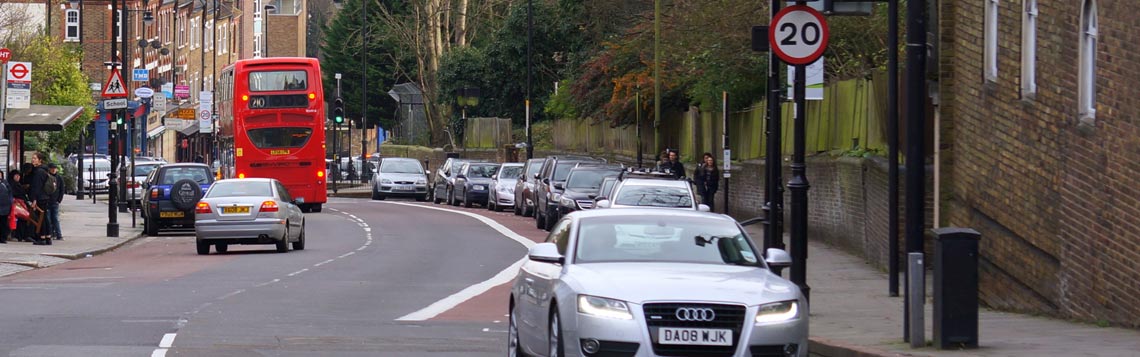
Does a car or truck accident count as a work injury?
If an employee is injured in a car crash while on the job, they are eligible to receive workers’ compensation benefits. “On the job” injuries are not limited to accidents and injuries that happen inside the workplace, they may also include injuries suffered away from an employee’s place of work while performing a job-related task, such as making a delivery or traveling to a client meeting.
Regular commutes to and from work don’t usually count. If you get into an accident on your way in on a regular workday, it’s probably not considered a work injury for the purposes of workers’ compensation.
If you drive around as part of your job, an injury on the road or loading/unloading accident is likely a work injury. If you don’t typically drive around for work but are required to drive for the benefit of your employer, that would be a work injury in many cases.
If you are out of town for work, pretty much any driving would count as work related. For traveling employees, any accidents or injuries that happen on a work trip, even while not technically working, can be considered a work injury. The reason is because you wouldn’t be in that town in the first place, had you not been on a work trip.
Workers’ compensation claims for truck drivers, traveling employees and work-related injuries that occur away from the job site can be challenging and complex. At Krol, Bongiorno & Given, we understand that many families depend on the income of an injured worker, and we are proud of our record protecting the injured and disabled. We have handled well over 30,000 claims for injured workers throughout the state of Illinois.