
Prosecutors seek 50-year sentence in massive Minnesota nonprofit fraud case
Breaking Legal News

The former leader of a Minnesota nonprofit who was convicted for her role in a staggering $250 million fraud case that helped ignite a federal immigration crackdown should spend 50 years in prison, prosecutors argued in a court filing.
Aimee Bock, who ran the organization Feeding Our Future, which claimed it helped provide millions of meals to children in need during the pandemic, is set to be sentenced Thursday in federal court in Minneapolis. President Donald Trump used the fraud cases to initially justify a massive surge of federal officers to the Minneapolis-St. Paul area last winter, leading to a pushback by residents and the deaths of two people.
"Feeding Our Future operated like a cash pipeline, open to anyone willing to submit fraudulent claims and pay kickbacks," prosecutors said in the Monday filing. "The ripple effects of her actions are profound, immeasurable, and will have lasting consequences for both Minnesota and the nation."
Bock was convicted last year of multiple counts involving conspiracy, wire fraud and bribery. She has long insisted she is innocent.
Her lawyer, Kenneth Udoibok, argued in a separate filing that she shouldn't have to serve for more than 37 months in prison, saying she had provided information to investigators. He argued that Bock had been unfairly painted as the mastermind and insisted that two co-defendants were responsible for running the scams.
The nonprofit sat atop a fraud network that included a web of partner organizations, phony distribution sites, kickbacks and fake lists of children supposedly being fed, prosecutors say. Dozens of people, many from the state's large Somali community, have been convicted for their roles in a series of overlapping food fraud cases that have spent years in the courts.
Trump, who has long derided Somalis, last year blasted the state as "a hub of fraudulent money laundering activity." He also criticized the leadership of Gov. Tim Walz, the Democrats' vice presidential nominee in the 2024 election.
"Somali gangs are terrorizing the people of that great State, and BILLIONS of Dollars are missing. Send them back to where they came from," Trump wrote on social media.
Bock is white and the U.S. Attorney's Office says the overwhelming majority of defendants in the cases are of Somali descent. Most are U.S. citizens.
The immigration surge led to repeated protests and confrontations between residents and federal officers and resulted in the killings of Renee Good and Alex Pretti.
Related listings
-
Supreme Court hollows out a landmark law that had protected minority voting rights
Breaking Legal News 05/16/2026President Lyndon B. Johnson knew the legislation he was about to sign was momentous, one that took courage for certain members of Congress to pass since the vote could cost them their seats.To honor that, he took the unusual step of leaving the Oval ...
-
A Canadian man facing 14 murder charges will plead guilty to aiding suicide
Breaking Legal News 04/19/2026A Canadian man facing murder charges for allegedly selling lethal substances online to people at risk of self-harm has agreed to plead guilty to 14 counts of counseling or aiding suicide, his lawyer said on Saturday.In turn, Canadian prosecutors will...
-
Trump is at the Court as it hears arguments over his bid to limit birthright citizenship
Breaking Legal News 04/02/2026The Supreme Court is taking up one of the term's most consequential cases, President Donald Trump's executive order on birthright citizenship declaring that children born to parents who are in the United States illegally or temporarily are not Americ...
Does a car or truck accident count as a work injury?
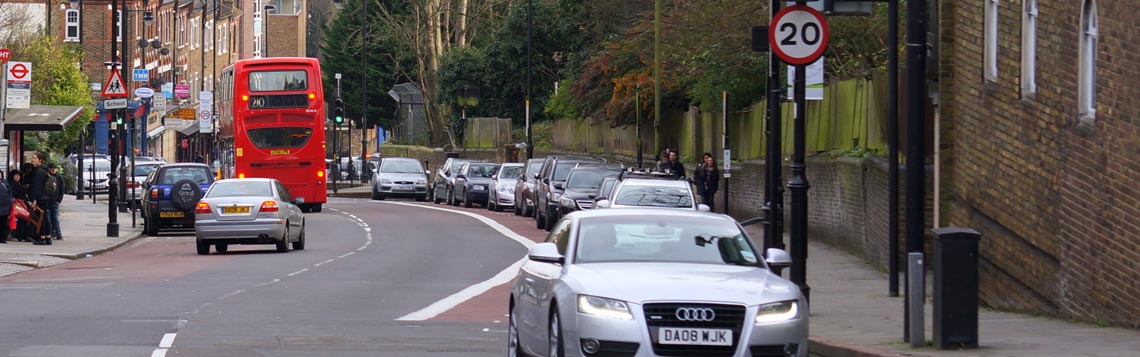
If an employee is injured in a car crash while on the job, they are eligible to receive workers’ compensation benefits. “On the job” injuries are not limited to accidents and injuries that happen inside the workplace, they may also include injuries suffered away from an employee’s place of work while performing a job-related task, such as making a delivery or traveling to a client meeting.
Regular commutes to and from work don’t usually count. If you get into an accident on your way in on a regular workday, it’s probably not considered a work injury for the purposes of workers’ compensation.
If you drive around as part of your job, an injury on the road or loading/unloading accident is likely a work injury. If you don’t typically drive around for work but are required to drive for the benefit of your employer, that would be a work injury in many cases.
If you are out of town for work, pretty much any driving would count as work related. For traveling employees, any accidents or injuries that happen on a work trip, even while not technically working, can be considered a work injury. The reason is because you wouldn’t be in that town in the first place, had you not been on a work trip.
Workers’ compensation claims for truck drivers, traveling employees and work-related injuries that occur away from the job site can be challenging and complex. At Krol, Bongiorno & Given, we understand that many families depend on the income of an injured worker, and we are proud of our record protecting the injured and disabled. We have handled well over 30,000 claims for injured workers throughout the state of Illinois.