
Supreme Court hollows out a landmark law that had protected minority voting rights
Breaking Legal News

President Lyndon B. Johnson knew the legislation he was about to sign was momentous, one that took courage for certain members of Congress to pass since the vote could cost them their seats.
To honor that, he took the unusual step of leaving the Oval Office and going to Capitol Hill for the signing ceremony. It was Aug. 6, 1965, five months after the "Bloody Sunday" attack on civil rights marchers in Selma, Alabama, gave momentum to the bill that became known as the Voting Rights Act.
In the six decades since, it became one of the most consequential laws in the nation's history, preventing discrimination against minorities at the ballot box and helping to elect thousands of Black and Hispanic representatives at all levels of government.
On Wednesday, the U.S. Supreme Court knocked out a major pillar of the law that had protected against racial discrimination in voting and representation. It was a decision that came more than a decade after the court undermined another key tenet of the law and led to restrictive voting laws in a number of states.
Voting and civil rights advocates were left fearful of what lies ahead for minority communities. "It means that you have entire communities that can go without having representation," said Cliff Albright, a co-founder of the group Black Voters Matter. "It is literally throwing us back to the Jim Crow era unapologetically, and that's not exaggeration."
Kareem Crayton, vice president of the Brennan Center for Justice's Washington office, said the court's steady work to erode the Voting Rights Act, culminating in Wednesday's decision, amounted to "burying it without the funeral."
The Supreme Court's ruling came in a congressional redistricting case out of Louisiana after the state created a district that gave the state its second Black representative to Congress.
It found that map to be an unconstitutional gerrymander because it took race into account to draw the lines. In an opinion written by Justice Samuel Alito, the court's conservative majority said the provision of the Voting Rights Act in question, called Section 2, was designed to protect voters from intentional discrimination.
Related listings
-
A Canadian man facing 14 murder charges will plead guilty to aiding suicide
Breaking Legal News 04/19/2026A Canadian man facing murder charges for allegedly selling lethal substances online to people at risk of self-harm has agreed to plead guilty to 14 counts of counseling or aiding suicide, his lawyer said on Saturday.In turn, Canadian prosecutors will...
-
Trump is at the Court as it hears arguments over his bid to limit birthright citizenship
Breaking Legal News 04/02/2026The Supreme Court is taking up one of the term's most consequential cases, President Donald Trump's executive order on birthright citizenship declaring that children born to parents who are in the United States illegally or temporarily are not Americ...
-
Federal judge blocks Pentagon from labeling Anthropic a supply chain risk
Breaking Legal News 03/27/2026A federal judge has ruled in favor of artificial intelligence company Anthropic in temporarily blocking the Pentagon from labeling the company as a supply chain risk.U.S. District Judge Rita Lin on Thursday said she was also blocking enforcement of P...
Does a car or truck accident count as a work injury?
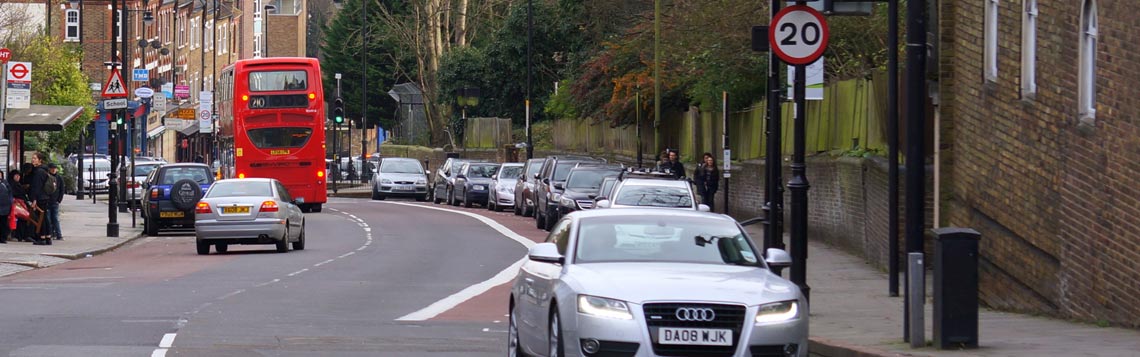
If an employee is injured in a car crash while on the job, they are eligible to receive workers’ compensation benefits. “On the job” injuries are not limited to accidents and injuries that happen inside the workplace, they may also include injuries suffered away from an employee’s place of work while performing a job-related task, such as making a delivery or traveling to a client meeting.
Regular commutes to and from work don’t usually count. If you get into an accident on your way in on a regular workday, it’s probably not considered a work injury for the purposes of workers’ compensation.
If you drive around as part of your job, an injury on the road or loading/unloading accident is likely a work injury. If you don’t typically drive around for work but are required to drive for the benefit of your employer, that would be a work injury in many cases.
If you are out of town for work, pretty much any driving would count as work related. For traveling employees, any accidents or injuries that happen on a work trip, even while not technically working, can be considered a work injury. The reason is because you wouldn’t be in that town in the first place, had you not been on a work trip.
Workers’ compensation claims for truck drivers, traveling employees and work-related injuries that occur away from the job site can be challenging and complex. At Krol, Bongiorno & Given, we understand that many families depend on the income of an injured worker, and we are proud of our record protecting the injured and disabled. We have handled well over 30,000 claims for injured workers throughout the state of Illinois.