
White House urges Congress to take a light touch on AI regulations
Lawyer Interviews

The White House said Friday that Congress should "preempt state AI laws" that it views as too burdensome, laying out a broad framework for how it wants Congress to address concerns about artificial intelligence without curbing growth or innovation in the sector.
The legislative blueprint outlines a half-dozen guiding principles for lawmakers, focusing on protecting children, preventing electricity costs from surging, respecting intellectual property rights, preventing censorship and educating Americans on using the technology.
House Republican leaders swiftly endorsed the framework and said they're ready to work "across the aisle" to pass legislation, but doing so would be a heavy lift, requiring agreement with Democrats in the Senate as public divisions over AI run deep.
The announcement comes as state governments have forged ahead on their own regulations for AI while civil liberties and consumer rights groups lobby for more regulations on the powerful technology. The industry and the White House have pushed back, arguing that a patchwork of rules would hurt growth. Trump signed an executive order in December to block states from crafting their own regulations.
"This was in response to a growing patchwork of 50 different state regulatory regimes that threaten to stifle innovation and jeopardize America's lead in the AI race," said White House AI czar David Sacks in a social media post Friday.
Sacks said the next step is to work with Congress to turn the administration's principles into federal legislation. While passing sweeping AI legislation will be difficult, especially in a midterm election year, the framework appeared designed to appeal to some AI-wary Republicans and Democrats with a focus on widespread and bipartisan concerns, such as the harms that AI chatbot companionship can pose to children and the electricity costs of AI infrastructure.
"It covers basically all the key sticking points I think that might stop an AI bill from moving through Congress," said Neil Chilson, a Republican former chief technologist for the Federal Trade Commission who now leads AI policy at the Abundance Institute. "It reads to me as an attempt to build a larger tent, even if it doesn't give everybody everything that they want."
But it has already been panned by some Democrats, including U.S. Rep. Josh Gottheimer of New Jersey, who said in a statement it "fails to address key issues, including strong accountability for AI companies, under the guise of protecting children, communities, and creators. Americans need protection — but this means nothing if we allow the AI industry to be the Wild West."
Whether AI legislation can pass both chambers of Congress could also rely heavily on the support of Republicans like U.S. Sen. Marsha Blackburn of Tennessee, who has introduced her own AI bill, and last year was instrumental in thwarting Trump's earlier attempt to deter state governments from regulating AI. Blackburn on Friday called Trump's framework a roadmap and welcomed the administration to the "important discussion" of getting a bill passed.
Several states — including California, Colorado, Texas and Utah — have already passed laws that set some rules for AI across the private sector.
With bipartisan support in the Texas legislature, a new AI law that took effect this year in the Republican-led state requires government agencies and health care providers to disclose when they are using AI to interact with consumers or answer questions. The law also prohibits the development of AI that encourages a person to commit suicide, harm themselves, harm another person or engage in criminal activity.
A federal law following Trump's framework "could knock out parts of Texas's AI code while leaving some parts standing," said Saurabh Vishnubhakat, a professor at Yeshiva University's Cardozo School of Law who has studied AI law.
Related listings
-
Supreme Court Blocks California Transgender Student Disclosure Law
Lawyer Interviews 03/03/2026The Supreme Court cleared the way Monday for California schools to tell parents if their children identify as transgender without getting the student's approval, granting an emergency appeal from a conservative legal group.The order blocks for now a ...
-
China stages military drills around Taiwan to warn ‘external forces’ after US
Lawyer Interviews 12/27/2025China’s military on Monday dispatched air, navy and missile units to conduct joint live-fire drills around the island of Taiwan, which Beijing called a “stern warning” against separatist and “external interference” force...
-

Zimbabwe court to rule Friday on opposition's vote challenge
Lawyer Interviews 08/21/2018Zimbabwe's Constitutional Court said it will rule on Friday after hearing the main opposition party's challenge to the results of last month's presidential election, the first without longtime leader Robert Mugabe on the ballot.Police barricaded stre...
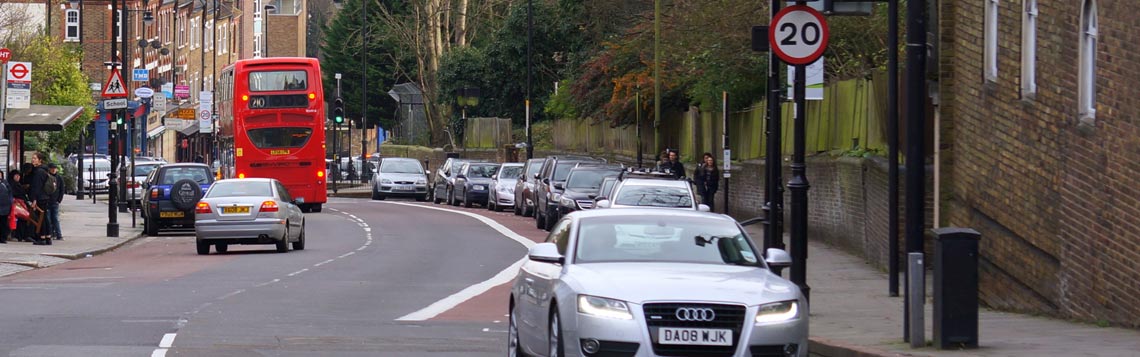
Does a car or truck accident count as a work injury?
If an employee is injured in a car crash while on the job, they are eligible to receive workers’ compensation benefits. “On the job” injuries are not limited to accidents and injuries that happen inside the workplace, they may also include injuries suffered away from an employee’s place of work while performing a job-related task, such as making a delivery or traveling to a client meeting.
Regular commutes to and from work don’t usually count. If you get into an accident on your way in on a regular workday, it’s probably not considered a work injury for the purposes of workers’ compensation.
If you drive around as part of your job, an injury on the road or loading/unloading accident is likely a work injury. If you don’t typically drive around for work but are required to drive for the benefit of your employer, that would be a work injury in many cases.
If you are out of town for work, pretty much any driving would count as work related. For traveling employees, any accidents or injuries that happen on a work trip, even while not technically working, can be considered a work injury. The reason is because you wouldn’t be in that town in the first place, had you not been on a work trip.
Workers’ compensation claims for truck drivers, traveling employees and work-related injuries that occur away from the job site can be challenging and complex. At Krol, Bongiorno & Given, we understand that many families depend on the income of an injured worker, and we are proud of our record protecting the injured and disabled. We have handled well over 30,000 claims for injured workers throughout the state of Illinois.