
Supreme Court rejects Trump mail ballot restrictions ahead of midterms
Legal Issues

The Supreme Court on Monday rejected President Donald Trump's bid to restrict mail ballots for the midterm elections, capping a flurry of last-minute legal action with voting already underway.
The decision allows states to continue sending out mail ballots under the same processes they've used for years and have accounted for nearly a third of votes cast.
It represented a stark defeat for Trump on an issue he consistently has emphasized as vital to ensuring election integrity even though there is virtually no evidence of fraud with mail ballots.
The Supreme Court majority wrote that the administration's push to implement the restrictions this year is likely to lose in court, though the brief emergency order didn't detail its reasoning. Two justices, Samuel Alito and Clarence Thomas, publicly dissented.
The Trump administration had asked the justices, once again at the center of a roiling political controversy, to clear the way for restrictions before the pivotal November contests for control of Congress.
Alito wrote in his dissent that the Postal Service "has broad authority to regulate the mail" and likely does have the power to enforce Trump's restrictions.
Justice Brett Kavanaugh, meanwhile, agreed that the restrictions should not go into effect for the midterms but indicated he might rule in favor of the Trump administration if the issue comes back before the court at a later time.
Mail ballots are already being sent to voters
Election officials have said there was simply no way to carry out a complete overhaul in the weeks before the midterms. Indeed, Alabama, North Carolina and Wisconsin began sending mail ballots to voters over the past week while the new system was still not active.
The Trump administration plan would require states to adopt a uniform envelope style and submit lists of eligible voters to an online portal. The Postal Service could refuse to deliver ballots to states that didn't comply.
The administration's efforts had the potential to be especially disruptive in states that send out ballots entirely by mail. Washington's Secretary of State Steve Hobbs, a Democrat, said the decision means work "to carry out a safe, secure, and accurate election" can continue "without having to upend our election processes to meet unrealistic ballot mail requirements."
In Arizona, another largely vote-by-mail state, Democratic Secretary of State Adrian Fontes said "it is crucial for us to continue rejecting the notion that access and security are mutually exclusive when it comes to running strong elections."
Utah Lt. Gov. Deidre Henderson, a Republican serving as the state's chief election officer, said on social media that the Supreme Court's decision means "Utahns can have confidence that the 2026 election will proceed as normal."
The White House and Justice Department did not immediately respond to requests for comment, but have in the past framed the restrictions as commonsense changes aimed at keeping elections secure.
State officials and voting rights groups pushed back
Democratic state officials and voting rights groups challenged the restrictions in court, arguing that the president has no constitutional authority to set election rules that would "virtually eliminate mail voting on the eve of a major election."
A whistleblower report, meanwhile, said the postal system's requirements could lead to millions of mail ballots never being sent, because problems with the not-yet-operational portal meant a single bar code error could result in an entire batch of ballots being tossed out.
Related listings
-
Dominican appeals court to hear arguments on Franco’s conviction
Legal Issues 11/08/2025Wander Franco’s attorneys pushed to have the suspended Tampa Bay Rays shortstop’s sexual-abuse conviction and sentencing overturned Tuesday.Franco in June was convicted of sexually abusing a minor, and he then received a two-year suspende...
-
Call of Duty Maker Seeks Dismissal in Texas School Shooting Case
Legal Issues 09/17/2025A lawyer for the maker of the video game Call of Duty argued Friday that a judge should dismiss a lawsuit brought by families of the victims of the Robb Elementary School attack in Uvalde, Texas, saying the contents of the war game are protected by t...
-
Hong Kong court affirms landmark sedition conviction for pro-democracy activist
Legal Issues 03/07/2024Criticizing laws or chanting anti-government slogans can be enough to jail someone for sedition in Hong Kong, an appeal court ruled Thursday in a landmark case brought under a colonial-era law increasingly used to crush dissent.Tam Tak-chi, the first...
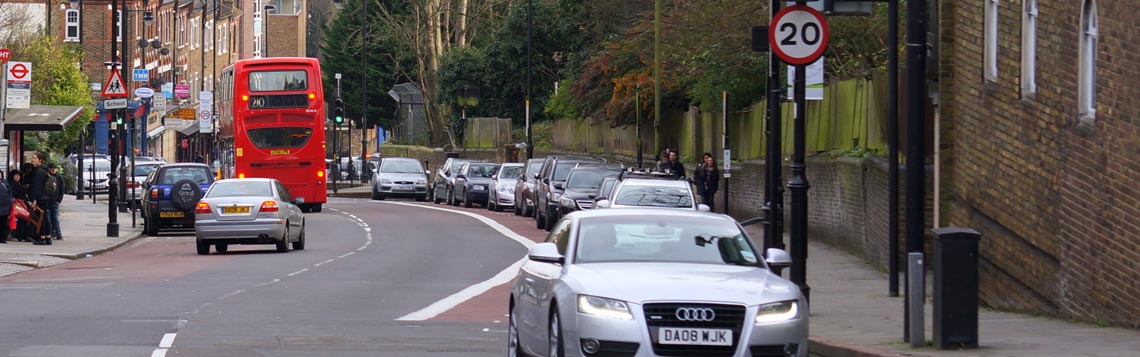
Does a car or truck accident count as a work injury?
If an employee is injured in a car crash while on the job, they are eligible to receive workers’ compensation benefits. “On the job” injuries are not limited to accidents and injuries that happen inside the workplace, they may also include injuries suffered away from an employee’s place of work while performing a job-related task, such as making a delivery or traveling to a client meeting.
Regular commutes to and from work don’t usually count. If you get into an accident on your way in on a regular workday, it’s probably not considered a work injury for the purposes of workers’ compensation.
If you drive around as part of your job, an injury on the road or loading/unloading accident is likely a work injury. If you don’t typically drive around for work but are required to drive for the benefit of your employer, that would be a work injury in many cases.
If you are out of town for work, pretty much any driving would count as work related. For traveling employees, any accidents or injuries that happen on a work trip, even while not technically working, can be considered a work injury. The reason is because you wouldn’t be in that town in the first place, had you not been on a work trip.
Workers’ compensation claims for truck drivers, traveling employees and work-related injuries that occur away from the job site can be challenging and complex. At Krol, Bongiorno & Given, we understand that many families depend on the income of an injured worker, and we are proud of our record protecting the injured and disabled. We have handled well over 30,000 claims for injured workers throughout the state of Illinois.