
Trump and top Iranian officials exchange threats over protests roiling Iran
National Court News

U.S. President Donald Trump and top Iranian officials exchanged dueling threats Friday as widening protests swept across parts of the Islamic Republic, further escalating tensions between the countries after America bombed Iranian nuclear sites in June.
At least seven people have been killed so far in violence surrounding the demonstrations, which were sparked in part by the collapse of Iran’s rial currency but have increasingly seen crowds chanting anti-government slogans.
The protests, now in their sixth day, have become the biggest in Iran since 2022, when the death of 22-year-old Mahsa Amini in police custody triggered nationwide demonstrations. However, the demonstrations have yet to be countrywide and have not been as intense as those surrounding the death of Amini, who was detained over not wearing her hijab, or headscarf, to the liking of authorities.
Trump post sparks quick Iranian response
Trump initially wrote on his Truth Social platform, warning Iran that if it “violently kills peaceful protesters,” the United States “will come to their rescue.”
“We are locked and loaded and ready to go,” Trump wrote, without elaborating.
Shortly after, Ali Larijani, a former parliament speaker who serves as the secretary of Iran’s Supreme National Security Council, alleged on the social platform X that Israel and the U.S. were stoking the demonstrations. He offered no evidence to support the allegation, which Iranian officials have repeatedly made during years of protests sweeping the country.
“Trump should know that intervention by the U.S. in the domestic problem corresponds to chaos in the entire region and the destruction of the U.S. interests,” Larijani wrote on X, which the Iranian government blocks. “The people of the U.S. should know that Trump began the adventurism. They should take care of their own soldiers.”
Larijani’s remarks likely referenced America’s wide military footprint in the region. Iran in June attacked Al Udeid Air Base in Qatar after the U.S. strikes on three nuclear sites during Israel’s 12-day war on the Islamic Republic. No one was injured though a missile did hit a radome there.
Ali Shamkhani, an adviser to Supreme Leader Ayatollah Ali Khamenei who previously was the council’s secretary for years, separately warned that “any interventionist hand that gets too close to the security of Iran will be cut.”
“The people of Iran properly know the experience of ‘being rescued’ by Americans: from Iraq and Afghanistan to Gaza,” he added on X.
Iran’s hard-liner parliament speaker Mohammad Bagher Qalibaf also threatened that all American bases and forces would be “legitimate targets.”
Iran’s Foreign Ministry spokesperson Esmail Baghaei also responded, citing a list of Tehran’s longtime grievances against the U.S., including a CIA-backed coup in 1953, the downing of a passenger jet in 1988 and taking part in the June war.
The Iranian response came as the protests shake what has been a common refrain from officials in the theocracy — that the country broadly backed its government after the war.
Related listings
-
Building a Nationwide Korean-American Portal with Clear Community Guidelines
National Court News 09/20/2025WebPromo.com was launched with the vision of creating a nationwide Korean-American portal, where people across the United States can easily access the information they need. While a few local community sites exist, the lack of a comprehensive platfor...
-
Justin Timberlake charged with driving while intoxicated in the Hamptons
National Court News 06/17/2024Pop star Justin Timberlake was charged early Tuesday with drunken driving in a village in New York’s Hamptons, after police said he ran a stop sign and veered out of his lane in the posh seaside summer retreat.The boy band singer-turned-solo st...
-
Wisconsin Supreme Court orders new legislative maps in redistricting case
National Court News 12/24/2023The liberal-controlled Wisconsin Supreme Court overturned Republican-drawn legislative maps on Friday and ordered that new district boundary lines be drawn as Democrats had urged in a redistricting case they hope will weaken GOP majorities.The ruling...
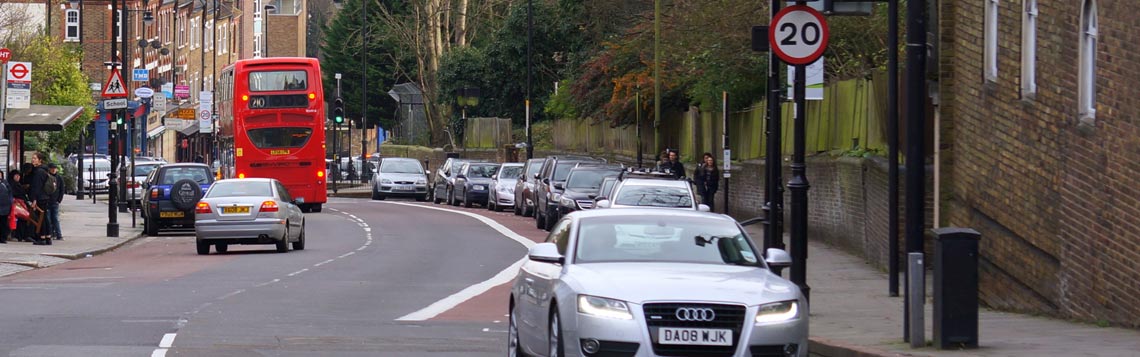
Does a car or truck accident count as a work injury?
If an employee is injured in a car crash while on the job, they are eligible to receive workers’ compensation benefits. “On the job” injuries are not limited to accidents and injuries that happen inside the workplace, they may also include injuries suffered away from an employee’s place of work while performing a job-related task, such as making a delivery or traveling to a client meeting.
Regular commutes to and from work don’t usually count. If you get into an accident on your way in on a regular workday, it’s probably not considered a work injury for the purposes of workers’ compensation.
If you drive around as part of your job, an injury on the road or loading/unloading accident is likely a work injury. If you don’t typically drive around for work but are required to drive for the benefit of your employer, that would be a work injury in many cases.
If you are out of town for work, pretty much any driving would count as work related. For traveling employees, any accidents or injuries that happen on a work trip, even while not technically working, can be considered a work injury. The reason is because you wouldn’t be in that town in the first place, had you not been on a work trip.
Workers’ compensation claims for truck drivers, traveling employees and work-related injuries that occur away from the job site can be challenging and complex. At Krol, Bongiorno & Given, we understand that many families depend on the income of an injured worker, and we are proud of our record protecting the injured and disabled. We have handled well over 30,000 claims for injured workers throughout the state of Illinois.