
Maduro Pleads Not Guilty, Claims Capture in U.S. Drug Case
U.S. Court News

A defiant Nicolás Maduro declared himself “the president of my country” as he protested his capture and pleaded not guilty Monday to federal drug trafficking charges that the Trump administration used to justify removing him from power in Venezuela.
“I was captured,” Maduro said in Spanish as translated by a courtroom interpreter before being cut off by the judge. Asked later for his plea to the charges, he stated: “I am innocent. I am not guilty. I am a decent man, the constitutional president of my country.”
Maduro’s court appearance in Manhattan, his first since he and his wife, Cilia Flores, were seized from their Caracas home Saturday in a stunning middle-of-the-night military operation, kicked off the U.S. government’s most consequential prosecution in decades of a foreign head of state. She also pleaded not guilty.
The criminal case is unfolding against a broader diplomatic backdrop of an audacious U.S.-engineered regime change that President Donald Trump has said will enable his administration to “run” the South American country.
Maduro, 63, was brought to court under heavy security early Monday — flown by helicopter to Manhattan from Brooklyn, where he is jailed, and then driven to the courthouse in an armored vehicle. He and Flores were led into court just before noon. Both were in leg shackles and jail-issued garb, and both put on headsets to hear the English-language proceeding as it was translated into Spanish.
As Maduro left the courtroom, a man in the audience denounced him as an “illegitimate” president.
As a criminal defendant in the U.S. legal system, Maduro will have the same rights as any other person charged with a crime in the country — including the right to jury trial. But, given the circumstances of his arrest and the geopolitical stakes at play, he’ll also be nearly — but not quite — unique.
That was made clear from the outset as Maduro, who took copious notes throughout the proceedings and wished Happy New Year to reporters as he entered the courtroom, repeatedly pressed his case that he had been unlawfully abducted.
“I am here kidnapped since Jan. 3, Saturday,” Maduro said, standing and leaning his tall frame toward a tabletop microphone. “I was captured at my home in Caracas.”
U.S. District Judge Alvin Hellerstein, a 92-year-old jurist who was appointed to the federal bench in 1998 by Bill Clinton, interrupted him, saying: “There will be a time and place to go into all of this.” Hellerstein added that Maduro’s lawyer could do so later.
“At this point in time, I only want to know one thing,” the judge said. “Are you Nicolás Maduro Moros?”
“I am Nicolás Maduro Moros,” the defendant responded.
Maduro’s lawyer, Barry Pollack, said he expects to contest the legality of his “military abduction.”
Pollack, a prominent Washington lawyer whose clients have included WikiLeaks founder Julian Assange, said Maduro is “head of a sovereign state and is entitled to the privileges and immunities that go with that office.”
Panamanian strongman Manuel Noriega unsuccessfully tried the same immunity defense after the U.S. captured him in a similar military invasion in 1990. But the U.S. doesn’t recognize Maduro as Venezuela’s legitimate head of state — particularly after a much-disputed 2024 reelection.
Flores, who identified herself to the judge as “first lady of the Republic of Venezuela,” had bandages on her forehead and right temple. Her lawyer, Mark Donnelly, said she suffered “significant injuries” during her capture.
A 25-page indictment accuses Maduro and others of working with drug cartels to facilitate the shipment of thousands of tons of cocaine into the U.S. They could face life in prison if convicted.
Among other things, the indictment accuses Maduro and his wife of ordering kidnappings, beatings and murders of those who owed them drug money or undermined their drug trafficking operation. That included the killing of a local drug boss in Caracas, the indictment said.
Related listings
-
US announces massive arms sales to Taiwan worth more than $10 billion
U.S. Court News 12/19/2025President Donald Trump’s administration has announced a massive package of arms sales to Taiwan valued at more than $10 billion that includes medium-range missiles, howitzers and drones, drawing an angry response from China.The State Department...
-
Trump bans travel from 5 more countries, imposes new limits on others
U.S. Court News 12/15/2025President Donald Trump‘s administration is expanding its travel ban to include five more countries and impose new limits on others.This move Tuesday is part of ongoing efforts to tighten U.S. entry standards for travel and immigration. The deci...
-
Do Kwon sentenced to 15 years in prison for $40 billion stablecoin fraud
U.S. Court News 12/11/2025Onetime cryptocurrency mogul Do Kwon was sentenced Thursday to 15 years in prison after a $40 billion crash revealed his crypto ecosystem to be a fraud. Victims said the 34-year-old financial technology whiz weaponized their trust to convince them th...
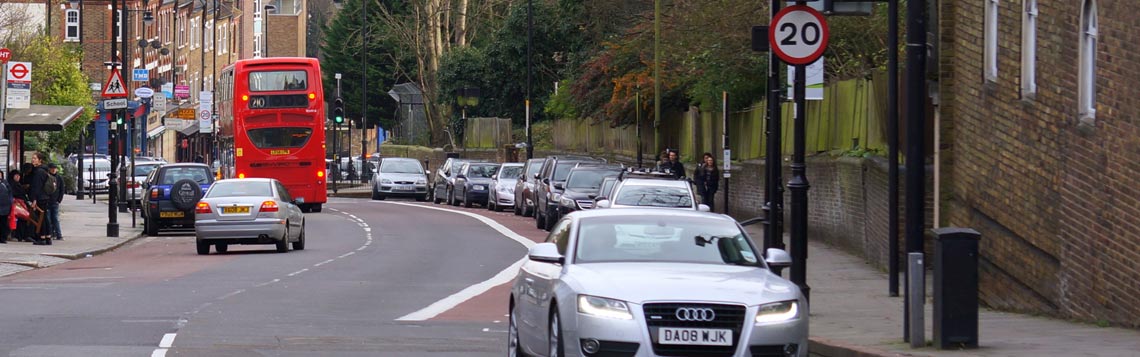
Does a car or truck accident count as a work injury?
If an employee is injured in a car crash while on the job, they are eligible to receive workers’ compensation benefits. “On the job” injuries are not limited to accidents and injuries that happen inside the workplace, they may also include injuries suffered away from an employee’s place of work while performing a job-related task, such as making a delivery or traveling to a client meeting.
Regular commutes to and from work don’t usually count. If you get into an accident on your way in on a regular workday, it’s probably not considered a work injury for the purposes of workers’ compensation.
If you drive around as part of your job, an injury on the road or loading/unloading accident is likely a work injury. If you don’t typically drive around for work but are required to drive for the benefit of your employer, that would be a work injury in many cases.
If you are out of town for work, pretty much any driving would count as work related. For traveling employees, any accidents or injuries that happen on a work trip, even while not technically working, can be considered a work injury. The reason is because you wouldn’t be in that town in the first place, had you not been on a work trip.
Workers’ compensation claims for truck drivers, traveling employees and work-related injuries that occur away from the job site can be challenging and complex. At Krol, Bongiorno & Given, we understand that many families depend on the income of an injured worker, and we are proud of our record protecting the injured and disabled. We have handled well over 30,000 claims for injured workers throughout the state of Illinois.