
Small businesses file lawsuits against Trump’s new sweeping tariffs
Breaking Legal News

Two lawsuits filed by small businesses are challenging Trump’s sweeping tariffs announced Thursday that impose double-digit levies on 60 trading partners.
The tariffs, implemented under Section 301 of the Trade Act of 1974 for what the Trump administration says is countries’ failure to prevent imports produced by forced labor, cover 99% of U.S. imports. Critics say the goal is less to prevent forced-labor imports and more to replace the worldwide tariffs that Trump imposed last year that were struck down by the Supreme Court in February. They came just as temporary 10% worldwide tariffs — that had also been challenged in court — expired.
Educational toy company Learning Resources, which was part of the tariff lawsuit that won in the Supreme Court, filed a new suit along with several other small businesses in the Court of International Trade on Friday over the current round of tariffs.
The second lawsuit was filed by Burlap and Barrel, a New York-based spice company, and Collective Horology, a watch retailer based in Ventura, California. They are represented by Liberty Justice Center, a libertarian advocacy group.
Both lawsuits argue that the government didn’t adequately establish its case against each specific economy or spell how the tariffs will eliminate the specified practice they are being levied for, as required by Section 301.
“Forced labor is morally indefensible, but an important objective does not give the government permission to ignore the law,” said Sara Albrecht, chairman and CEO of the Liberty Justice Center. “The administration allowed one global tariff to expire and immediately replaced it with another under a different statute. Changing the statute doesn’t change the law.”
The White House did not immediately respond to a request for comment.
Experts say it might be tougher to successfully challenge the current round of tariffs than previous rounds. Trump used Section 301 to impose big tariffs on China in his first term, and they survived court challenges.
Unlike the Section 122 levies that expired Friday, “these tariffs will be with us for the long haul,” said lawyer Patrick Childress, a partner at Holland & Knight and a former U.S. trade official.
Even if countries enact the precise policies the U.S. wants, he said, they will still need to prove that they’re enforcing them to Washington’s satisfaction before the tariffs are removed. “This suggests that no short-term path for country-wide relief from the new Section 301 tariffs will be available.”
Related listings
-
US bans foreign-made humanoid robots, targeting China over national security
Breaking Legal News 07/30/2026The U.S. Federal Communications Commission is banning imports of new foreign-made humanoid robots and power inverters, citing national security risks, in a move that targets China. Beijing quickly accused the U.S. of protectionism.The measures are li...
-
The U.S. government can continue collecting the 10% worldwide tariff it imposed
Breaking Legal News 07/26/2026The U.S. government can continue collecting the 10% worldwide tariff it imposed in February while legal challenges to the levies continue to work their way through the courts, a federal court ruled Thursday.The Court of Appeals for the Federal Circui...
-
Prosecutors seek 50-year sentence in massive Minnesota nonprofit fraud case
Breaking Legal News 05/22/2026The former leader of a Minnesota nonprofit who was convicted for her role in a staggering $250 million fraud case that helped ignite a federal immigration crackdown should spend 50 years in prison, prosecutors argued in a court filing.Aimee Bock, who...
Does a car or truck accident count as a work injury?
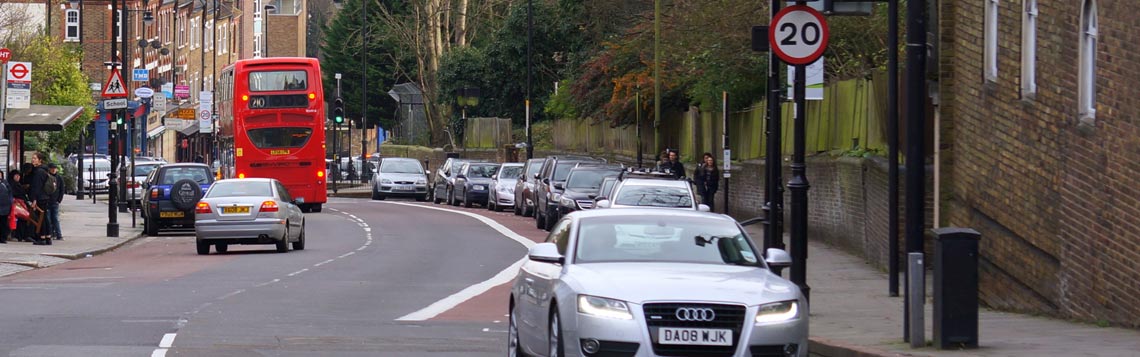
If an employee is injured in a car crash while on the job, they are eligible to receive workers’ compensation benefits. “On the job” injuries are not limited to accidents and injuries that happen inside the workplace, they may also include injuries suffered away from an employee’s place of work while performing a job-related task, such as making a delivery or traveling to a client meeting.
Regular commutes to and from work don’t usually count. If you get into an accident on your way in on a regular workday, it’s probably not considered a work injury for the purposes of workers’ compensation.
If you drive around as part of your job, an injury on the road or loading/unloading accident is likely a work injury. If you don’t typically drive around for work but are required to drive for the benefit of your employer, that would be a work injury in many cases.
If you are out of town for work, pretty much any driving would count as work related. For traveling employees, any accidents or injuries that happen on a work trip, even while not technically working, can be considered a work injury. The reason is because you wouldn’t be in that town in the first place, had you not been on a work trip.
Workers’ compensation claims for truck drivers, traveling employees and work-related injuries that occur away from the job site can be challenging and complex. At Krol, Bongiorno & Given, we understand that many families depend on the income of an injured worker, and we are proud of our record protecting the injured and disabled. We have handled well over 30,000 claims for injured workers throughout the state of Illinois.